
Is Men's Skin Really Different?

Updated: Jul 23
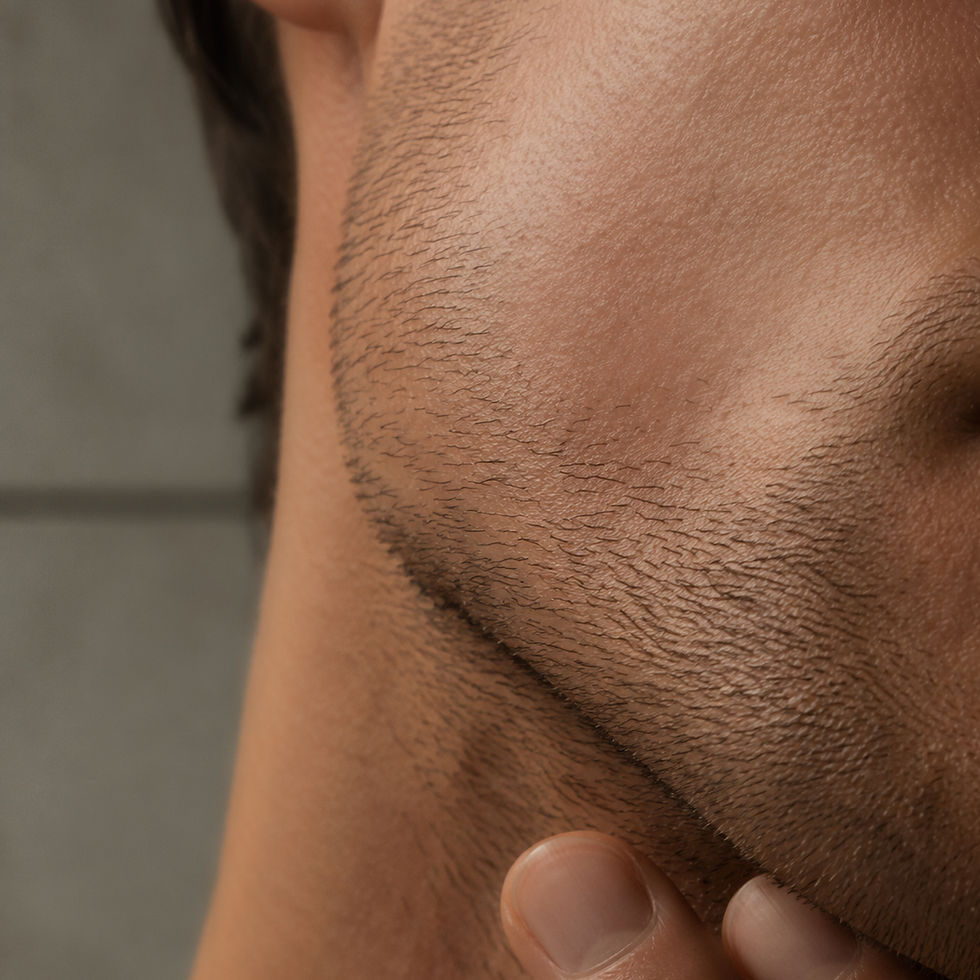
If you've ever shopped for skincare aimed at men, you've probably heard some version of the same claim: men's skin is different.
In some ways, that's true. Men often have greater facial hair density, different shaving habits, and may produce more oil on average than women. But many of the differences commonly associated with "men's skin" are far less straightforward than marketing often suggests.
The reality is that skin is influenced by much more than gender alone. Daily habits, grooming routines, sun exposure, lifestyle, personal goals, and individual biology all play important roles in how skin looks and behaves.
That's why the question isn't simply whether men's skin is different. The better question is:
Which differences actually matter when caring for skin, and which ones have been exaggerated over time?
In this article, we'll examine what research tells us about men's skin, where common misconceptions come from, and why understanding your skin's needs is often more important than understanding which category a product was marketed toward.
Is Men’s Skin Thicker?
Biological Reality
Yes. On average, men’s skin does tend to be thicker than women’s skin.
But here’s the part that often gets left out: the difference is mostly in the dermis, the deeper structural layer of the skin where collagen, elastin, and connective tissue live. That matters biologically. It can influence things like skin density, aging patterns, and how the skin changes over time.
For everyday skincare, though, this fact is usually less important than marketing makes it sound.
Consumer Reality
Most cosmetic skincare products are chosen based on what the skin is doing at the surface: is it oily, dry, sensitive, congested, dull, irritated, or dehydrated? Even ingredients like retinoids and peptides, which are often discussed in relation to deeper skin support, do not mean that men need an entirely separate category of products simply because the dermis may be thicker on average.
There is also a wide range of skin thickness across all people. Some women naturally have thicker skin than some men. Some men have thinner or more sensitive skin than the stereotype suggests.
The Takeaway
Men’s skin may be thicker on average, but that does not automatically mean men need “stronger” skincare. For most people, skin behavior matters more than gender.
Is Men’s Skin Oilier?

Biological Reality
Often, yes. Men tend to produce more sebum, or skin oil, on average, largely because androgens can influence the activity of the sebaceous glands.
This is one reason men are often described as having oilier skin, more visible pores, or more shine. There is truth to that pattern, especially after puberty and in younger adulthood. But this oil production is not determined by gender alone.
Consumer Reality
Daily habits can dramatically influence how oily skin looks and feels. If someone is washing with harsh soap, over-cleansing, skipping moisturizer, or using alcohol-heavy aftershave, the skin can become stripped, dehydrated, irritated, and less balanced.
This cycle is not unique to men. It can happen to anyone whose skin is being stripped faster than it is being supported. But because many men were never taught to moisturize, protect, or treat their skin gently, oiliness often gets framed as a “male skin” issue when it may also be a skincare habit issue.
The Takeaway
Men may produce more oil on average, but oily skin is shaped by both biology and behavior. The goal is not to attack the oil. It is to bring the skin back into balance.
Why Shaving Changes Everything
Biological Reality
Facial hair is one of the biggest reasons men’s skincare can be different in real life. Not every man shaves, not every man grows a full beard, and not everyone who shaves is a man. But if shaving is part of your routine, it absolutely changes the conversation.
A razor does more than remove hair. It also moves across the surface of the skin again and again, which can leave the area more prone to irritation, dryness, sensitivity, razor bumps, ingrown hairs, and uneven-looking tone.
Consumer Reality
This is where the “men’s skin” conversation starts to become less about what men are born with and more about what their skin goes through. Someone who shaves often might have skin that feels oily in some areas but dry, tight, or flaky around the beard line. They might deal with congestion, irritation, or dark marks from repeated inflammation. And depending on the shaving cream, gel, or aftershave they use, their skin may feel clean at first but less balanced later.
The Takeaway
For many men, shaving affects their skin more day to day than whether their skin is slightly thicker or oilier. So, if we’re going to talk honestly about men’s skincare, we have to talk about facial hair, shaving habits, and the skin left behind.
Do Men Need Different Skincare Products?
Biological Reality
Not automatically. Many “men’s” products have historically been existing or lightly adapted formulas placed into darker, more masculine-looking packaging. A grey bottle does not change how a formula works on the skin.
And clearly, many men have used those products just fine.
Consumer Reality
“Fine” is not the same as great.
The stronger argument for men’s skincare is not that men need a separate version of every cleanser, moisturizer, serum, or sunscreen. It is that men deserve products created with their actual experience in mind. That includes facial hair, shaving, oil management, texture preferences, routine simplicity, visible results, and the way many men want their skin to look: healthy, refined, comfortable, and natural.
The Takeaway
Men do not need different skincare simply because they are men. They benefit from skincare that understands their habits, goals, comfort level, and lived experience. That is where the category becomes meaningful.
What Matters More Than Gender Alone?
Biological Reality

Gender can influence skin, but it does not make all men’s skin the same. Two men can have completely different needs: One may be oily and resilient, another dry and sensitive. One may shave every morning; another may keep a beard. One may want the fastest possible routine, while another may enjoy taking his time.
They should not automatically be treated as having the same skin simply because they are both men.
Consumer Reality
This is where thoughtful men’s skincare starts. The goal is not to ignore gender. It is to look deeper: at skin behavior, shaving habits, lifestyle,
aesthetic goals, and comfort level.
Many men want skin that looks healthier, smoother, clearer, and more rested, without necessarily looking glossy, heavy, or overly “done.” Others may want more glow, more polish, or a more expressive finish. Both are valid.
The point is not that every man needs a different product. It is that men deserve skincare conversations, education, and product development that recognizes that range.
The Takeaway
Men’s skincare should not be built on stereotypes. It should be built with a better understanding of men as individuals: their skin, their habits, their goals, and their different versions of confidence.
Why Men’s Skincare Still Matters
Biological Reality
Men’s skin is not a completely separate species of skin. It follows the same basic principles: cleanse without stripping, hydrate, protect, support the barrier, and treat specific concerns with intention.
But men’s experiences with skincare have not always been the same.
Many men were not taught to see skincare as something for them. Some were taught to ignore their skin until there was a problem. Others were handed products that felt harsh, overly fragranced, overly basic, or disconnected from how they actually wanted to look.
Consumer Reality
That is why men’s skincare still matters. Not because men need to be separated from beauty, but because beauty becomes stronger when more people feel included in it.
A thoughtful men’s skincare brand should not begin and end with masculine packaging. It should begin with real experience: shaving, facial hair, visible fatigue, oil control, texture, confidence, simplicity, and the desire to look better without feeling like someone else.
The Takeaway
Men’s skincare matters because representation, education, and inclusion can make beauty more accessible to more people. The goal is not to convince men that beauty is separate from masculinity. It is to remind them that it never had to be.
A Better Way to Think About Men's Skincare
Men’s skin can be different, but not in the simplistic way skincare marketing often suggests.
Biology matters. Facial hair, shaving habits, oil production, and hormonal influences can all affect how skin behaves. But so can daily routines, product habits, lifestyle, aesthetic goals, and personal preferences.

The strongest men’s skincare is not built on the idea that all men have the same skin. It is built on a better understanding of men as individuals: what their skin goes through, how they want to look, what they will actually use, and how they can see themselves represented in beauty.
That is where the conversation becomes more interesting.
Men’s skincare does not need to be built on stereotypes, fear, or the idea that men’s skin is a completely separate category of skin. It can be built on understanding. On representation. On products and education that meet men where they are while giving them room to see what is possible.
The future of men’s skincare is not about proving that men’s skin is completely different. It is about understanding men more completely.
Because the best skincare does not ask men to become someone else.
It helps them recognize what was already there.


Comments